We have parents come in all the time who have never had experience with Montessori education ask us “What will my child actually learn at a Montessori school?” We have learned that what they are really asking is: Will my child be prepared for life? At Country Day School in San Antonio, the answer is a resounding yes.
It is true that the Montessori curriculum is not just about academics. It’s about nurturing independence, curiosity, leadership, and a lifelong love of learning. We believe it makes more sense to teach your child how to inspire and create for themselves rather than rushing them into rote memorization and standardized testing. Here’s a detailed look at what the students ages 3–12 experience through Montessori education at Country Day.
The Foundations of the Montessori Curriculum
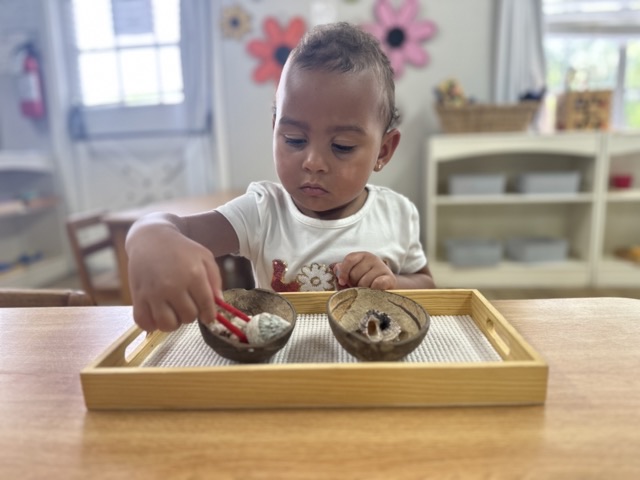
The Montessori curriculum is divided into five core areas. These areas are introduced at the preschool level and continue to expand in depth and complexity through elementary years:
- Practical Life: Children learn independence, care for themselves, and responsibility in their environment.
- Sensorial: Activities sharpen the senses and prepare children for abstract concepts in math and language.
- Mathematics: Kids use hands-on materials to move from learning numbers to exploring geometry and algebra.
- Language: From phonics to fluent reading and expressive writing, students gain strong communication skills.
- Cultural Studies: Geography, science, history, art, and respect for nature and cultures create well-rounded learners.
These foundations build knowledge and confidence, leadership, and grace—values woven deeply into the fabric of Country Day School.
To learn more about the Montessori method vs other methods you can read our blog here.
Montessori Curriculum by Age Group
Ages 3–6: Preschool / Kindergarten (Children’s House)
This is where the Montessori journey begins. In the Children’s House, little ones thrive in an environment that balances freedom with gentle guidance.
- Practical Life: Pouring, food preparation, and self-care foster independence. Grace & courtesy lessons nurture kindness and respect.
- Sensorial: Classic Montessori tools like the Pink Tower, color tablets, and sound cylinders help children refine observation and classification skills.
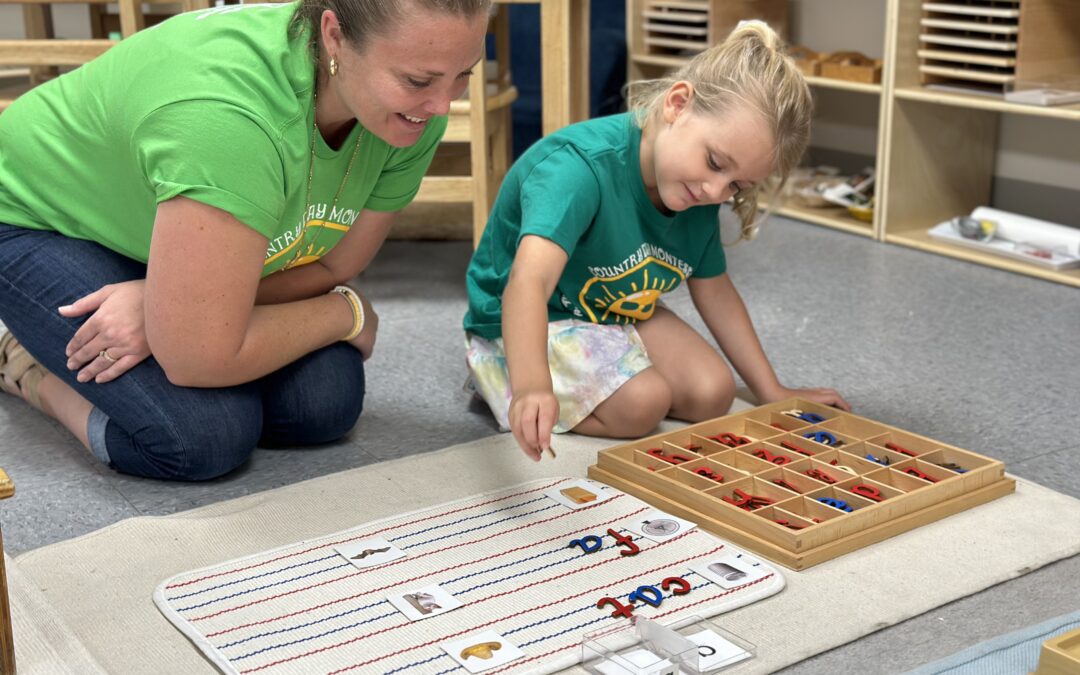
- Sandpaper letters and the Moveable Alphabet make reading and writing fun and hands-on.
- Mathematics: Number rods, spindle boxes, and golden beads introduce counting, place value, and early operations.
- Cultural Studies: Puzzle maps, stories, and simple botany/zoology activities open the world to curious minds.
At Country Day: Children learn responsibility by tending to classroom gardens and practice leadership through daily community roles.
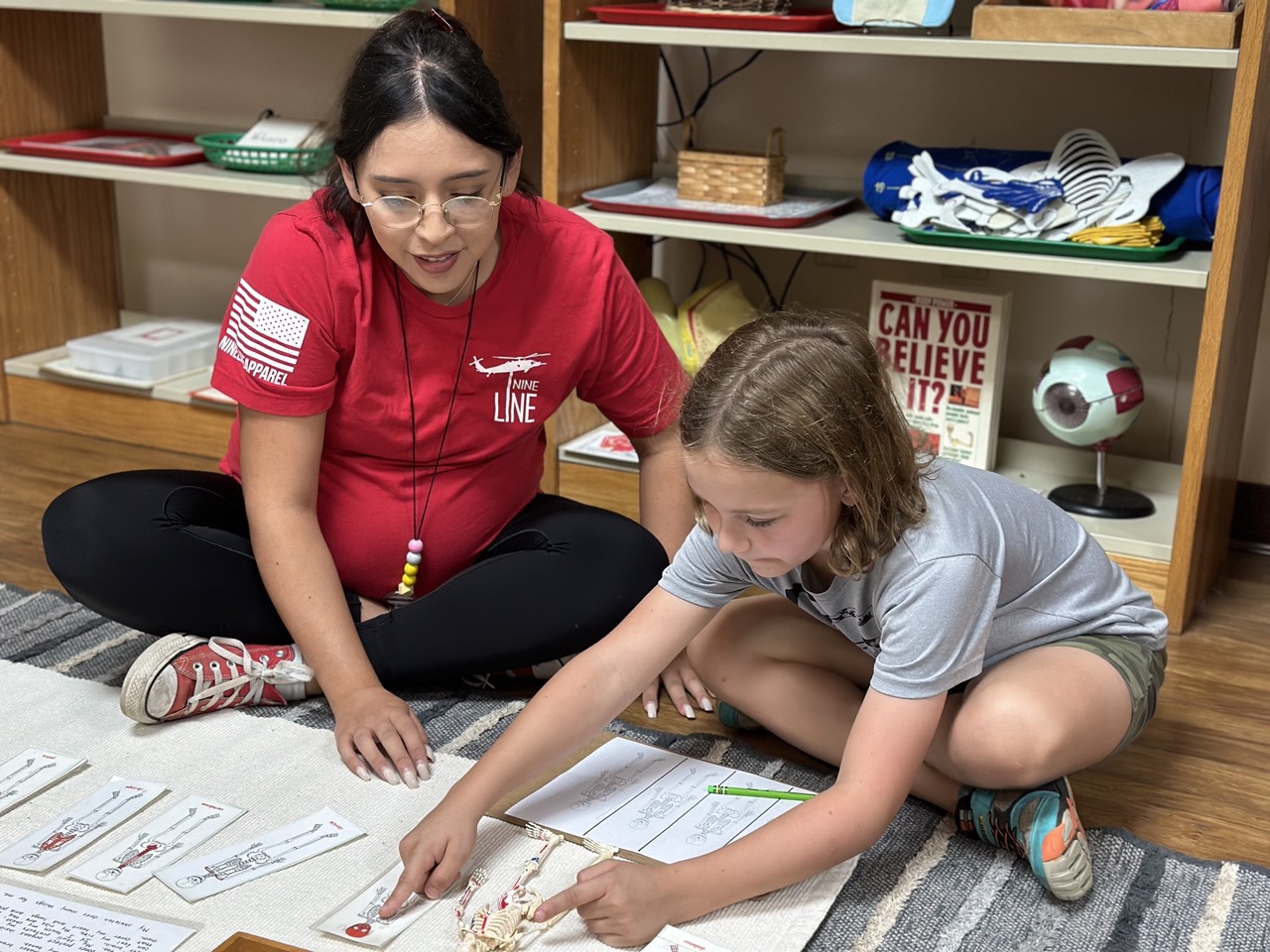
Ages 6–9: Lower Elementary
The Lower Elementary classroom builds on early foundations while encouraging greater independence and curiosity.
- Language: Students develop fluent reading, explore grammar, and express themselves through creative writing.
- Mathematics: Tools like the Stamp Game and golden beads help kids learn multiplication, division, and fractions.
- Cultural Studies: Students explore early human timelines, geography, and hands-on science experiments.
- Sensorial & Geometry: Shapes and measurement prepare students for abstract reasoning.
- Practical Life: Responsibilities shift toward leadership and collaboration within the classroom community.
At Country Day: Children lead peer presentations, building both subject mastery and public speaking skills.
Ages 9–12: Upper Elementary
By Upper Elementary, Montessori students are confident, self-motivated learners ready for advanced academics and real-world responsibility.
- Language: Students write research reports, practice advanced composition, and refine public speaking.
- Mathematics: Work expands into fractions, decimals, long division, early algebra, and geometry.
- Cultural Studies: In-depth projects explore history, geography, cultural respect, and ecology.
- Practical Life: Students lead by planning activities, managing projects, and mentoring younger peers.
At Country Day: Learners engage in environmental stewardship and community projects that reinforce both responsibility and respect for nature.
Why try Montessori at Country Day School?
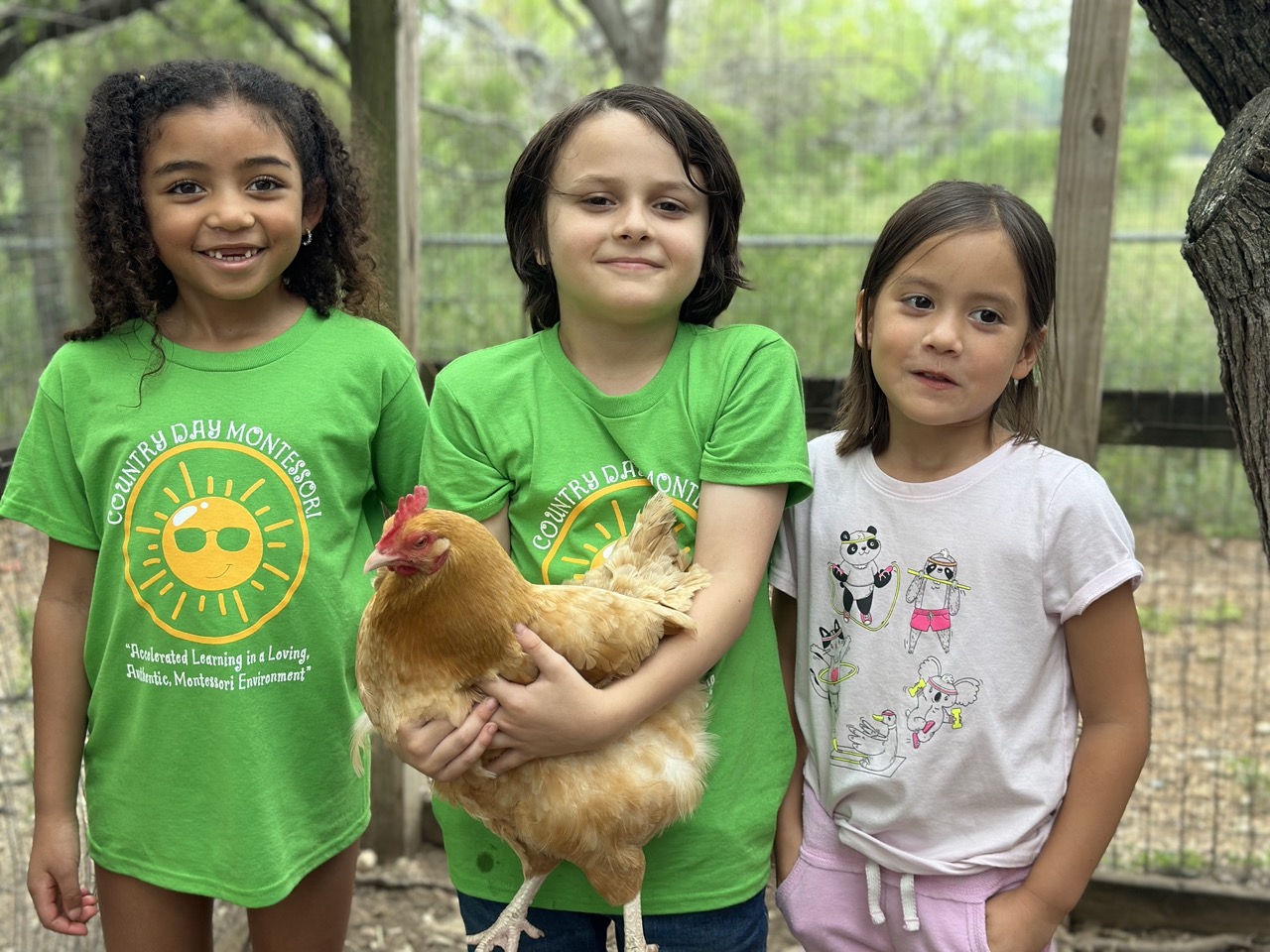
Not every Montessori school is the same. At Country Day School, the difference lies in:
- Montessori teachers who guide rather than lecture.
- Mixed-age classrooms that foster mentorship and collaboration.
- Hands-on materials that make abstract concepts concrete and engaging.
- Opportunities for accelerated learning, allowing children to advance at their own pace.
- A deep commitment to values: Grace & Courtesy, Independence, Leadership, Love of Learning, and Responsibility to Nature.
This combination creates confident, capable, and compassionate learners who thrive in and beyond the classroom.
See the Montessori Difference for Your Child
At Country Day School, education is a preparation for life. Children here don’t just memorize facts; they develop independence, confidence, and a true love of learning.
The best way to understand the Montessori advantage is to see it firsthand. Tour our San Antonio campus, meet our dedicated teachers, and watch children engaged in meaningful work.
👉 Schedule a tour today and discover how your child can thrive at Country Day School.
Frequently Asked Questions
How is progress measured without traditional grades?
Progress is measured by mastering concepts, teacher observations, and student work portfolios, not letter grades. Parents receive detailed feedback on both academic and personal growth.
What makes Country Day’s Montessori program unique in San Antonio?
Our school blends real Montessori methods, certified teachers, and a caring atmosphere. We focus on leadership and respect for nature, offering a well-rounded education.
Is Country Day School convenient to families near San Pedro and Bass Road?
Yes. Our campus is just minutes from the San Pedro and Bass Rd intersection, making it an easy drive for families in North Central San Antonio. Parents often tell us they love how convenient the drop-off and pick-up are, especially if they commute along San Pedro Avenue or Loop 410.
Have questions about Montessori in San Antonio?
Schedule a tour or visit Admissions to see openings.
Serving families in Uptown Central & Universal City