Imagine this: Your three-year-old makes their own snack. They slice bananas and pour milk without spilling. Your six-year-old reads in their cozy corner and helps with a puzzle. Your home feels calm and organized, filled with purposeful activity instead of chaos and screen time battles.
This isn’t a dream. It’s what happens when you use Montessori at home principles in your family life. This teaching method has helped kids enjoy learning and become independent for over a century. It can also turn your home into a nurturing space where children thrive.
At Country Day Montessori, families have thrived since 1983. We apply our guiding principles beyond the classroom. These methods will help, whether your child attends a Montessori school or you want to create a more peaceful, kid-centered home. You can create an environment that fosters your children’s confidence and enthusiasm for learning. The best part? You don’t need expensive materials or a big renovation. Just look at your home from your child’s point of view. Small, meaningful changes can make a big difference in their daily life. .
Understanding Montessori Principles at Home
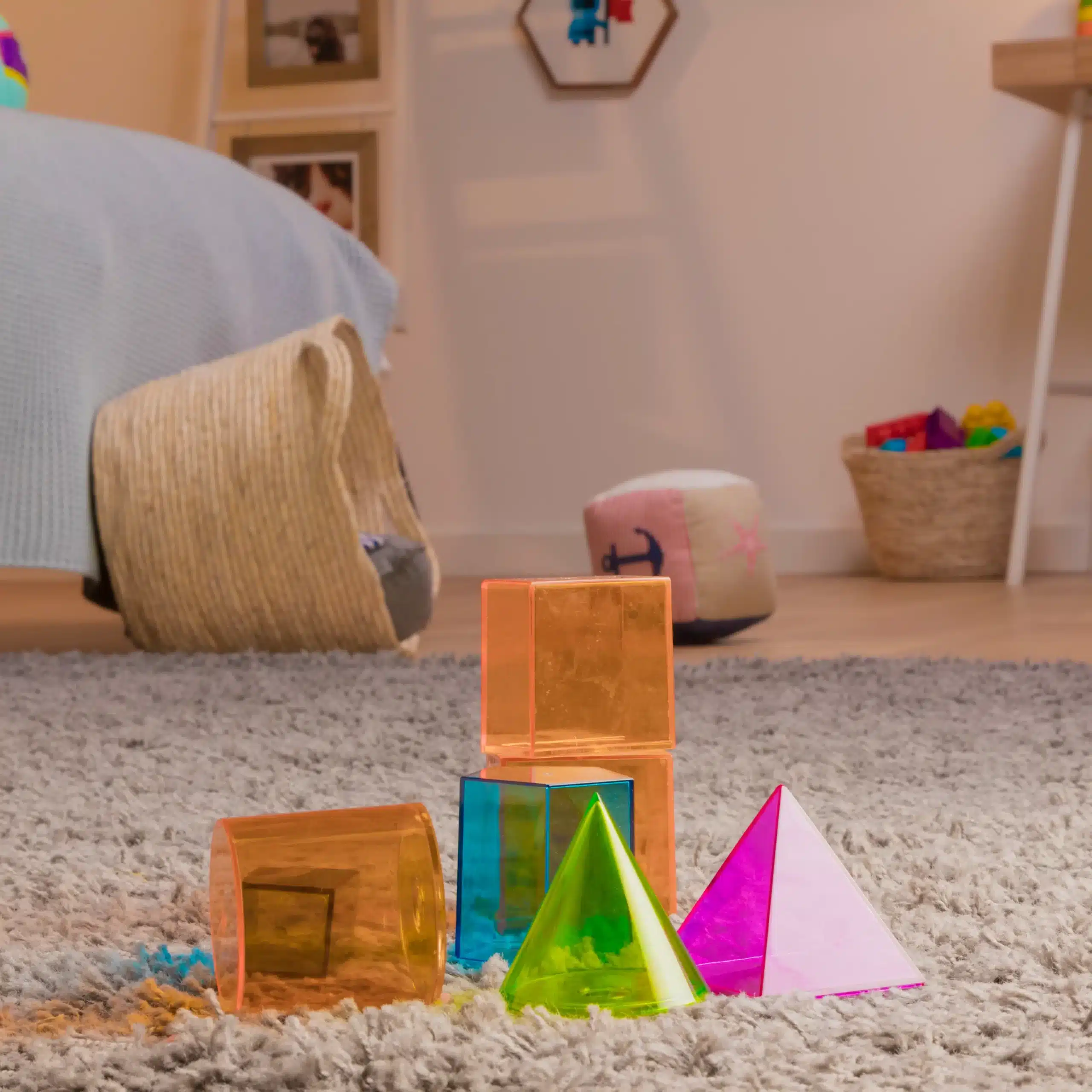
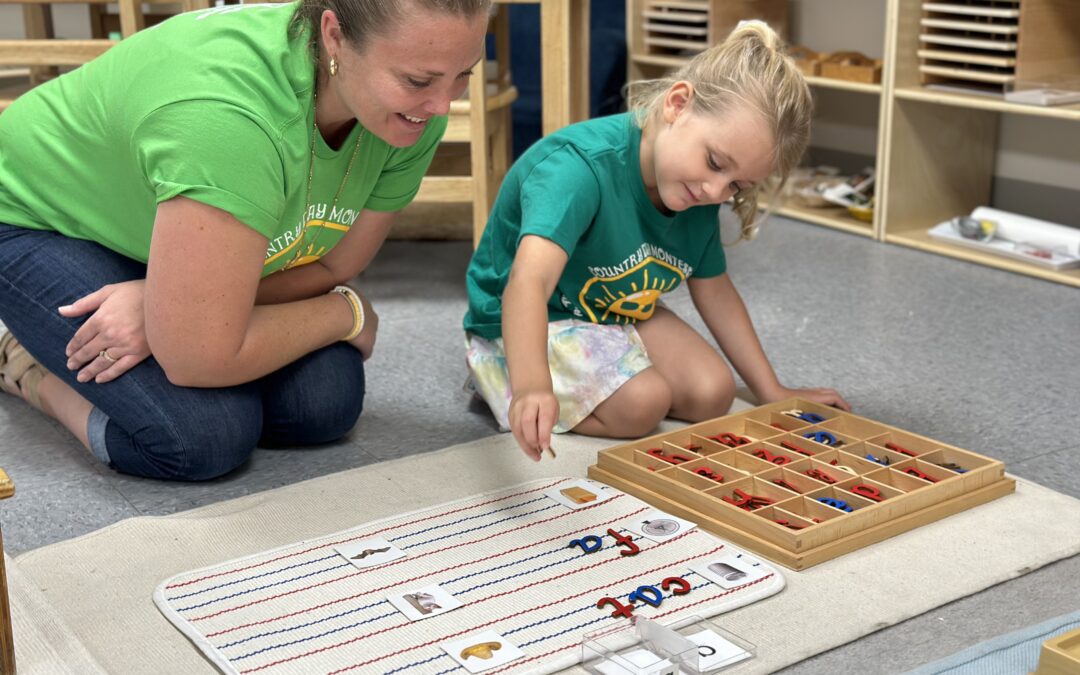
Dr. Maria Montessori discovered something remarkable: children are naturally curious learners. They thrive when we let them explore on their own. Instead of constantly directing every move, parents become observers and supporters. Think of yourself as setting up opportunities rather than controlling outcomes. This shift respects how children actually develop while building the skills they will use throughout their lives.
Independence as the Foundation
Montessori puts independence front and center. Let your child tackle dressing, basic cooking, and organizing their stuff, even when it’s slower than doing it yourself. Watching your four-year-old fumble with shirt buttons can test your patience. But this struggle builds real confidence. They learn by overcoming challenges.
The Prepared Environment Concept
A “prepared environment” may sound fancy, but it’s actually quite straightforward. You’re just arranging things so kids can help themselves safely. Install those low coat hooks, bring in kitchen step stools, and get child-sized brooms. Montessori students exhibit better self-control and working memory compared to traditional students, as their surroundings are carefully designed to showcase nature’s beauty and harmony. Daily chores become adventures when children can take part fully.
Mixed-Age Learning Through Siblings
Families naturally create mixed-age learning without trying. Big siblings show little ones how to tie their shoes or read simple words. Younger kids watch older ones tackle homework or sports. This approach fosters leadership naturally and provides younger kids with real role models. This is far more effective than any lecture on the subject of responsibility.
Hands-On, Real-World Experiences
Life itself becomes the curriculum when you embrace hands-on learning. Cooking sneaks in math through measuring cups. Gardens teach science through the study of plant growth cycles. Even sorting socks develops patterns and classification skills. Children understand that their work is important because it helps the family run smoothly. It’s not just busy work to keep them occupied.
Creating Your Home Montessori Environment
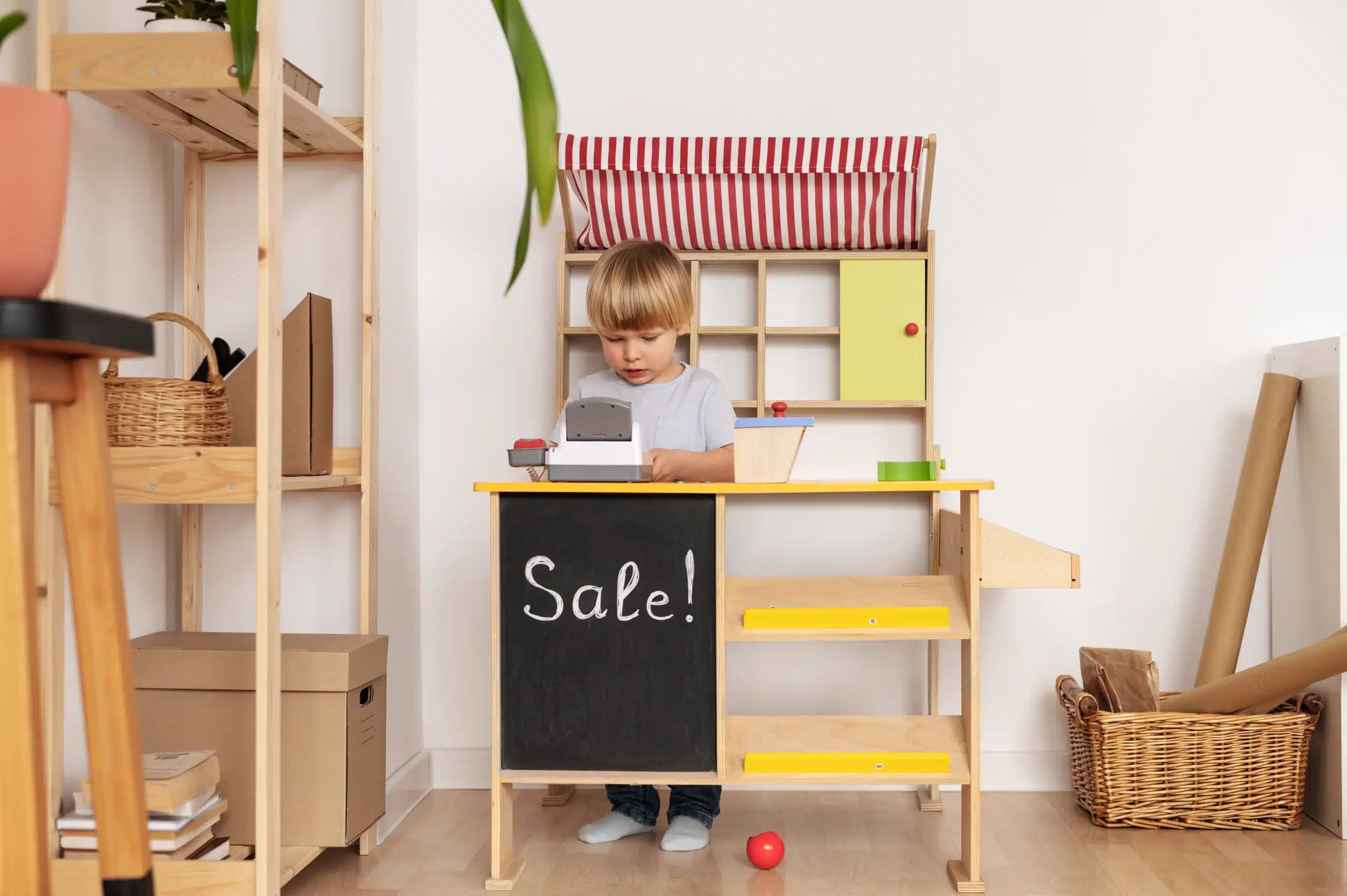
Your home already contains everything you need to create a powerful learning environment. See your space through your child’s eyes. Make easy changes to support their independence and encourage exploration.
Physical Space Setup
Accessibility and Child-Sized Tools
Everything changes when kids can actually reach their own stuff. Consider installing hooks at shoulder height in your child’s bedroom for storing pajamas and tomorrow’s clothes. Put a small stool near the bathroom sink so they can brush teeth without climbing. Store art supplies in a low-rolling cart that they can wheel around the house.
Get tools that actually fit small hands. A lightweight dustbuster lets your six-year-old clean up their own cracker crumbs. Small garden tools mean they can help plant flowers without wrestling with adult-sized shovels. Child-sized scissors for craft projects show you trust them with real responsibilities, not just pretend ones.
Natural Materials and Organization
Natural materials just feel better for both kids and adults. Research indicates that Montessori students exhibit better self-control and memory compared to their peers in traditional schools. This happens partly because their spaces use natural items and stay organized. Wicker baskets feel different from plastic bins. Wooden blocks have real weight, while foam ones feel fake. Even using glass jars to hold crayons makes your space look more thoughtful.
Smart organization prevents the dreaded toy avalanche. Try clear containers on accessible shelves instead of deep toy chests. Rotate puzzles and games every few weeks. This makes that old shape sorter fun again. When everything has its own spot, cleanup becomes automatic rather than overwhelming.
Essential Areas to Focus On
Kitchen Learning Laboratory
Turn your kitchen into a practical life laboratory. Set aside one low cabinet or drawer for your child’s dishes, cups, and utensils. Store healthy snacks in containers they can open themselves. Create a snack preparation area with child-accessible cutting boards, butter knives, and simple ingredients. Your kitchen becomes a place for your child to learn about measurement, sequences, and nutrition—all while helping with family meals.
Set up a cleaning station with child-sized supplies. A small bucket, sponge, and towel give your child the tools to clean up spills right away. This teaches responsibility while building confidence. The kitchen shifts from a place where kids need help to one where they can act independently and contribute.
Reading and Creative Spaces
Create a cozy reading corner that invites quiet time. Use a small bookshelf within reach, rotating books weekly to keep interest fresh. Add a comfy cushion or small chair, good lighting, and maybe a soft blanket. This space signals that reading is special and builds positive associations with books.
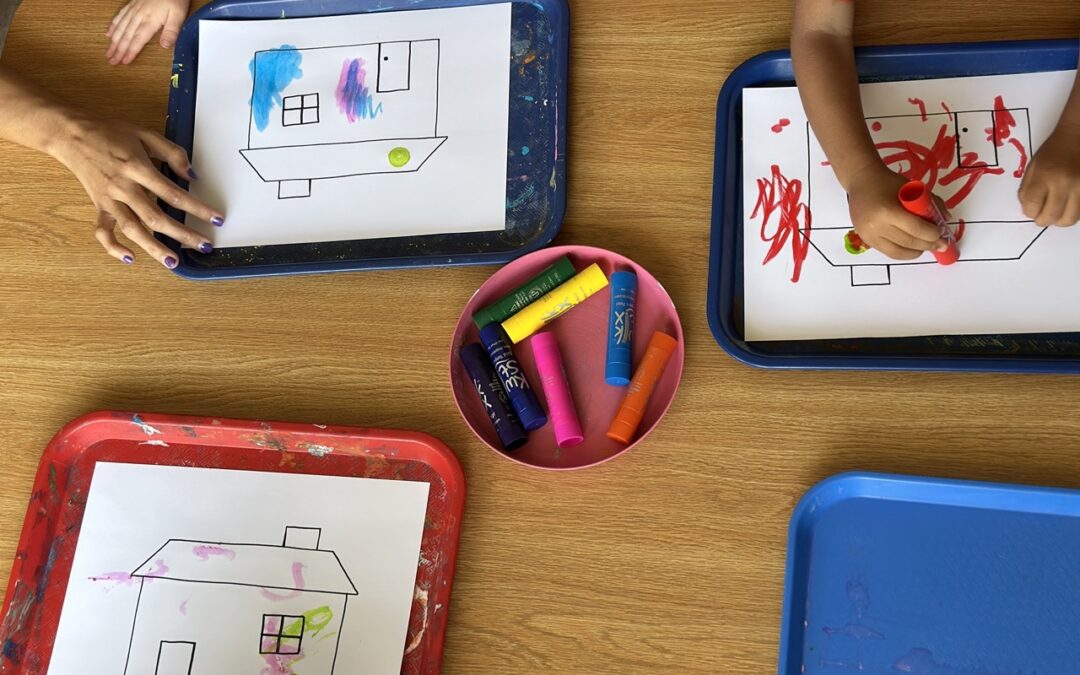
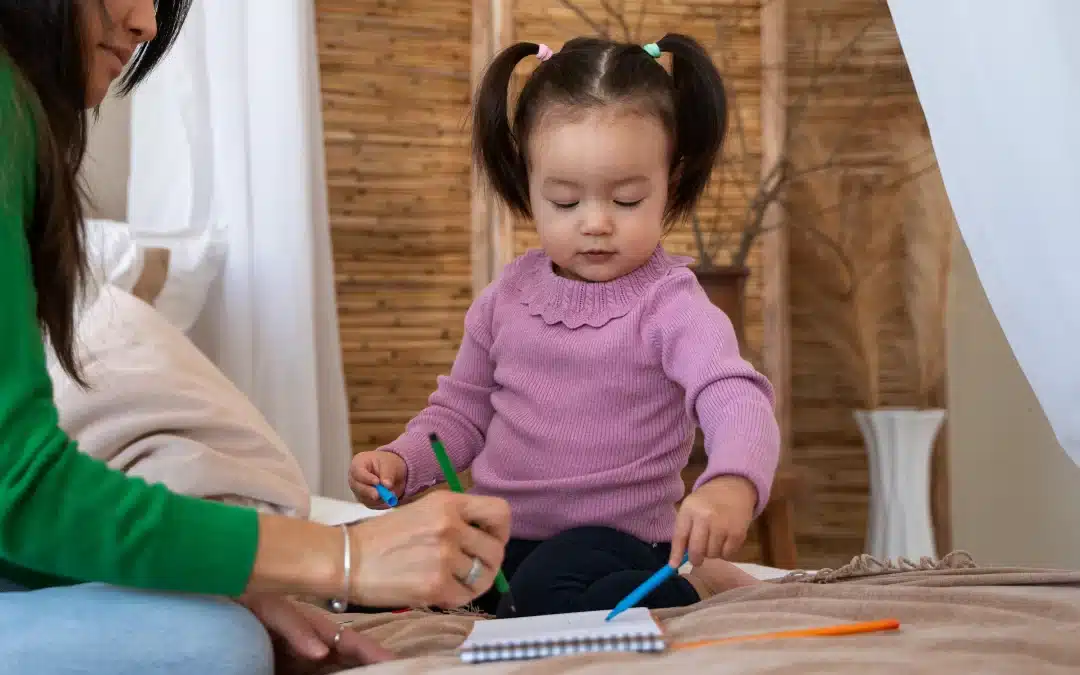
Set up also an art station with supplies organized in clear containers or baskets. Include paper, crayons, scissors, glue sticks, and natural materials like leaves. When children can access and clean up art supplies on their own, creative expression becomes a natural part of their day.
Nature Connection Areas
Encourage outdoor exploration, even in small spaces. A windowsill garden, bird feeder, or collections of natural treasures in baskets bring nature into daily life. These connections foster curiosity and scientific thinking while providing calming experiences.
Designate a space for nature collections and observations. Provide magnifying glasses, small containers, and a nature journal. Allow kids to examine leaves, rocks, or insects to develop observation skills. This area not only bridges indoor learning and outdoor discovery, but it also encourages kids to notice and appreciate the world around them.
Age-Appropriate Montessori Activities by Developmental Stage
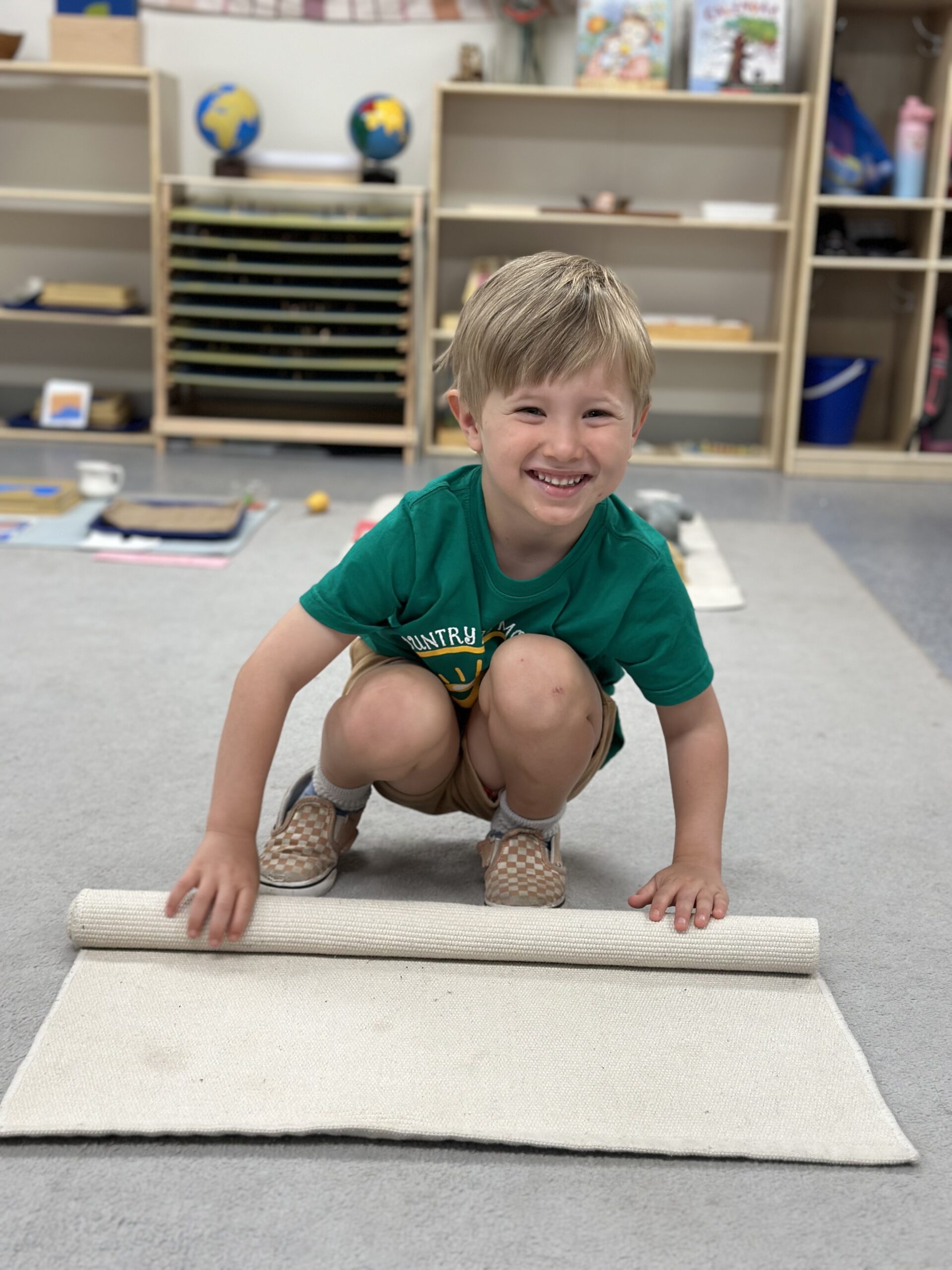
Children grow at their own pace. Knowing typical stages helps you choose activities that suit your child’s abilities. Each stage builds on the last, fostering lifelong learning and independence.
Infants and Toddlers (3 months – 18 months)
At this stage, children explore using their senses and develop basic motor skills. Simple activities support their curiosity and build coordination and language.
| Development Focus | Home Activities | Materials Needed |
| Sensory Exploration | Treasure baskets with natural objects, textured fabrics for touching | Wooden spoons, shells, fabric squares, safe household items |
| Motor Skills | Crawling obstacle courses, simple stacking toys | Pillows, soft blocks, large wooden rings |
| Language Development | Narrate daily activities, sing simple songs, read board books | Board books, your voice, everyday routines |
| Independence | Self-feeding finger foods, drinking from small cups | Child-sized cups, appropriate finger foods |
Key Activities:
- Create treasure baskets with safe, natural objects.
- Set up floor time with simple materials like wooden rings.
- Practice pouring with dry materials like rice (supervised).
- Establish routines for eating, sleeping, and playing.
Pre-Primary (18 months – 3 years)
Children at this stage seek independence and meaningful work. They enhance fine motor skills, expand language, and start to grasp social expectations.
| Development Focus | Home Activities | Materials Needed |
| Practical Life | Simple food preparation, watering plants, sorting activities | Child-sized tools, small watering can, sorting trays |
| Fine Motor Skills | Threading activities, opening and closing containers | Large beads, various containers with lids |
| Language Expansion | Three-part cards, storytelling, conversation during activities | Picture cards, books, everyday conversations |
| Independence | Dressing themselves, toileting, cleaning up spills | Step stools, child-sized cleaning supplies |
Daily Routine Activities:
- Morning: Help make breakfast (spreading butter, cutting bananas).
- Throughout Day: Clean up spills immediately with child-sized tools.
- Evening: Sort socks, fold washcloths, prepare clothes for tomorrow.
Anytime: Match objects, transfer activities (spooning, pouring).
Primary Age (3-6 years)
This stage is full of learning. Children develop academic skills while refining social skills and building confidence.
Academic Readiness
| Subject | Home Activities | Skills Developed |
| Pre-Reading | Sandpaper letters (or textured letters), rhyming games, phonetic matching | Letter recognition, phonemic awareness |
| Pre-Writing | Metal insets or tracing activities, fine motor games | Pencil grip, hand control, shape recognition |
| Mathematics | Counting games, number recognition, simple addition with objects | Number concepts, one-to-one correspondence |
| Science | Nature walks, simple experiments, plant care | Observation skills, scientific thinking |
Practical Life Mastery Children can handle more complex tasks:
- Kitchen: Prepare snacks, set the table, wash dishes.
- Cleaning: Dust furniture, organize belongings, care for pets.
- Self-Care: Choose clothing, manage hygiene.
- Social Skills: Practice courtesy, resolve conflicts.
Elementary Age (6-12 years)
Children develop abstract thinking and want to understand the world. They benefit from research projects and problem-solving.
Independent Learning Projects
| Age Range | Project Types | Skills Developed |
| 6-9 years | Simple research on favorite animals, countries, or historical figures | Research skills, reading comprehension, presentation |
| 9-12 years | In-depth studies connecting multiple subjects, community service projects | Abstract thinking, collaboration, civic responsibility |
Advanced Practical Life
Elementary children take on household responsibilities:
Daily Contributions:
- Plan and prepare meals.
- Manage schedules and homework.
- Care for younger siblings or pets.
- Organize their spaces.
Learning Extensions:
- Create budgets for family activities.
- Research family history or local culture.
- Start small businesses or fundraising.
- Volunteer in the community.
Implementation Tips for All Ages
- Start Small: Choose one or two activities that excite your child.
- Follow Their Lead: Notice what interests your child and build on it.
- Model Patience: Show the activities yourself, moving slowly for your child to observe.
- Embrace Mistakes: View spills as learning opportunities.
- Maintain Consistency: Establish routines that help your child predict daily activities.
These stages provide general guidance, but remember each child develops uniquely. Focus on their individual interests, abilities, and readiness.
Supporting Your Child’s School Learning at Home
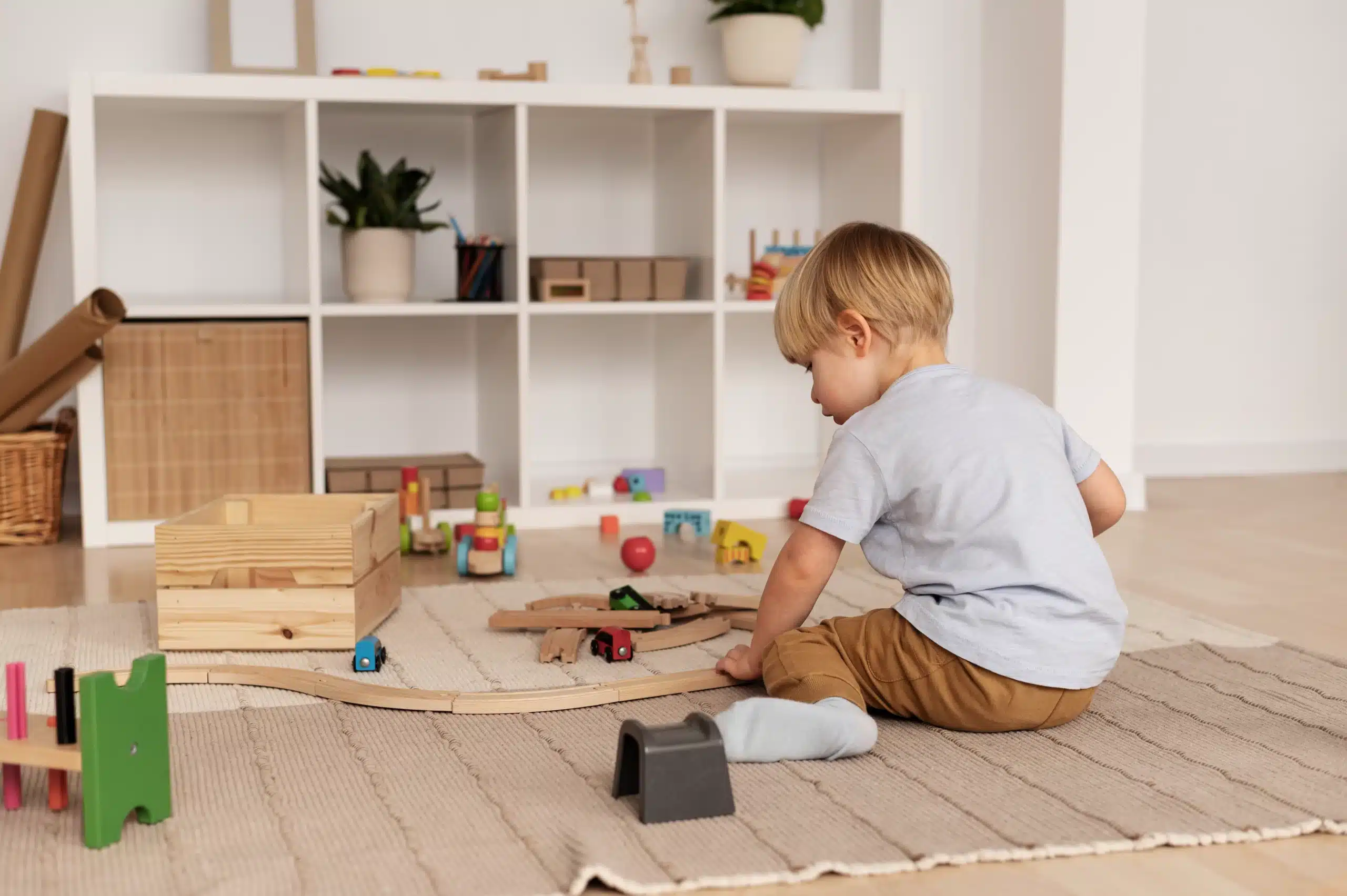
When your home matches your child’s school experience, learning flows easily. You don’t need to turn your home into a classroom. Focus on independence, respect, and meaningful work in your child’s school day.
Creating Consistency Between Home and School
Daily Routines: Match your child’s school routines at home. Start school with practical tasks. Begin your morning with simple jobs. For example, set the table or water the plants. This helps children feel secure in both places.
Independence Expectations: Support the same level of independence your child shows at school. If your five-year-old can pour their own water and clean spills at school, let them do it at home too. Resist the urge to “help” when they can manage on their own.
Problem-Solving Approach: Use the same conflict resolution methods your child learns at school. Encourage them to share their feelings. Suggest solutions and help them resolve disagreements peacefully. Avoid stepping in too quickly.
Reinforcing Learning Through Daily Life
Turn household tasks into learning opportunities:
| School Learning | Home Extension | Skills Reinforced |
| Mathematics | Cooking measurements, counting items, sorting laundry | Number concepts, patterns, classification |
| Language | Reading recipes, writing grocery lists, storytelling | Literacy, communication, vocabulary |
| Science | Gardening, weather observation, cooking experiments | Scientific method, cause and effect |
| Cultural Studies | Family traditions, community exploration, map activities | Geography, history, cultural awareness |
Communicating with Teachers
Share Observations: Tell teachers about your child’s interests and challenges at home. This helps them tailor classroom activities to fit your child’s needs.
Ask Specific Questions: Instead of asking, “How was my child’s day?” try, “What new work did my child choose today?” or “Which activities seemed most engaging?” These questions lead to useful insights.
Request Extension Ideas: Teachers can suggest ways to help students learn at home. This support doesn’t need to be formal homework.
Respecting Natural Learning Rhythms
Avoid Over-Scheduling: Kids need free time to think about school and explore their interests. Don’t fill every moment with planned activities.
Honor Rest and Reflection: Some children need quiet time after school. Allow them space to decompress instead of rushing into more learning activities.
Follow Their Lead: If your child shows strong interest in a school topic, offer materials and chances to explore it further. Natural curiosity leads to deeper learning.
Remember, your role is to support, not duplicate, your child’s school experience. Trust the learning process. Keep the respectful, child-centered approach that makes Montessori education work.
Common Challenges and Solutions
Every parent faces obstacles when using Montessori principles at home. These challenges are normal and can be managed with the right strategies.
Screen Time Management
The Challenge: Balancing technology with hands-on learning.
Solutions:
- Create Tech-Free Zones: Set meal times and the first hour after school as screen-free for natural conversation.
- Choose Quality Content: Pick educational programs that encourage interaction instead of passive viewing.
- Model Healthy Habits: Kids copy your tech use. Put devices away during family time and engage in activities together.
- Offer Fun Alternatives: Make hands-on activities enjoyable. Mix options and participate with enthusiasm.
Maintaining Organization
The Challenge: Staying organized with busy family schedules.
Solutions:
- Involve Children in Systems: When kids help create organization systems, they feel ownership and are more likely to maintain them.
- Start Small: Focus on organizing one area completely instead of trying to change everything at once.
- Evening Reset Routine: Spend 10-15 minutes each evening returning items to their places as a family.
- Regular Rotation: Schedule monthly toy and book rotations to prevent clutter and keep kids interested.
Managing Sibling Dynamics
The Challenge: Supporting mixed-age learning while preventing conflicts.
Solutions:
- 2-3 Years Apart: Use parallel activities with similar skills. One child can pour with large containers, the other with small ones.
- 4+ Years Apart: Create mentoring opportunities. The older child can teach the younger one to tie shoes or read simple words.
- Close in Age: Set up turn-taking systems. Use timers or visual cues to share popular materials fairly.
Balancing Structure with Freedom
The Challenge: Providing enough structure without being controlling.
Solutions:
- Clear Boundaries: Set firm rules for safety and respect. Let kids choose how to meet these expectations.
- Prepared Choices: Offer a few appealing options. Too many choices can be overwhelming.
- Natural Consequences: Let kids feel the effects of their choices safely. Don’t rush in to save them from minor discomfort.
- Trust the Process: Kids want order and to learn when their surroundings support them.
Busy Parent Schedules
The Challenge: Finding time for activities and supporting independent learning.
Solutions:
- Integrate Learning into Routines: Turn cooking, cleaning, and errands into learning moments. This way, you don’t need extra activities.
- Prepare in Advance: Set up activities during quiet time or after bedtime for the next day.
- Lower Perfection Standards: Basic activities using common materials are just as effective as fancy setups.
- Ask for Help: Older children can prepare activities for younger siblings, creating leadership opportunities while easing your workload.
Quick Success Tips
- Start with One Change: Choose the most appealing suggestion and stick to it before adding more.
- Observe Before Acting: Watch your child’s interests and energy to guide your approach without forcing activities.
- Celebrate Small Wins: Acknowledge your child’s independence and problem-solving. This reinforces positive behaviors naturally.
Implementing Montessori principles at home is a gradual journey. Each step toward greater independence and respect fosters lasting positive changes in your family dynamic.
San Antonio-Specific Resources and Activities
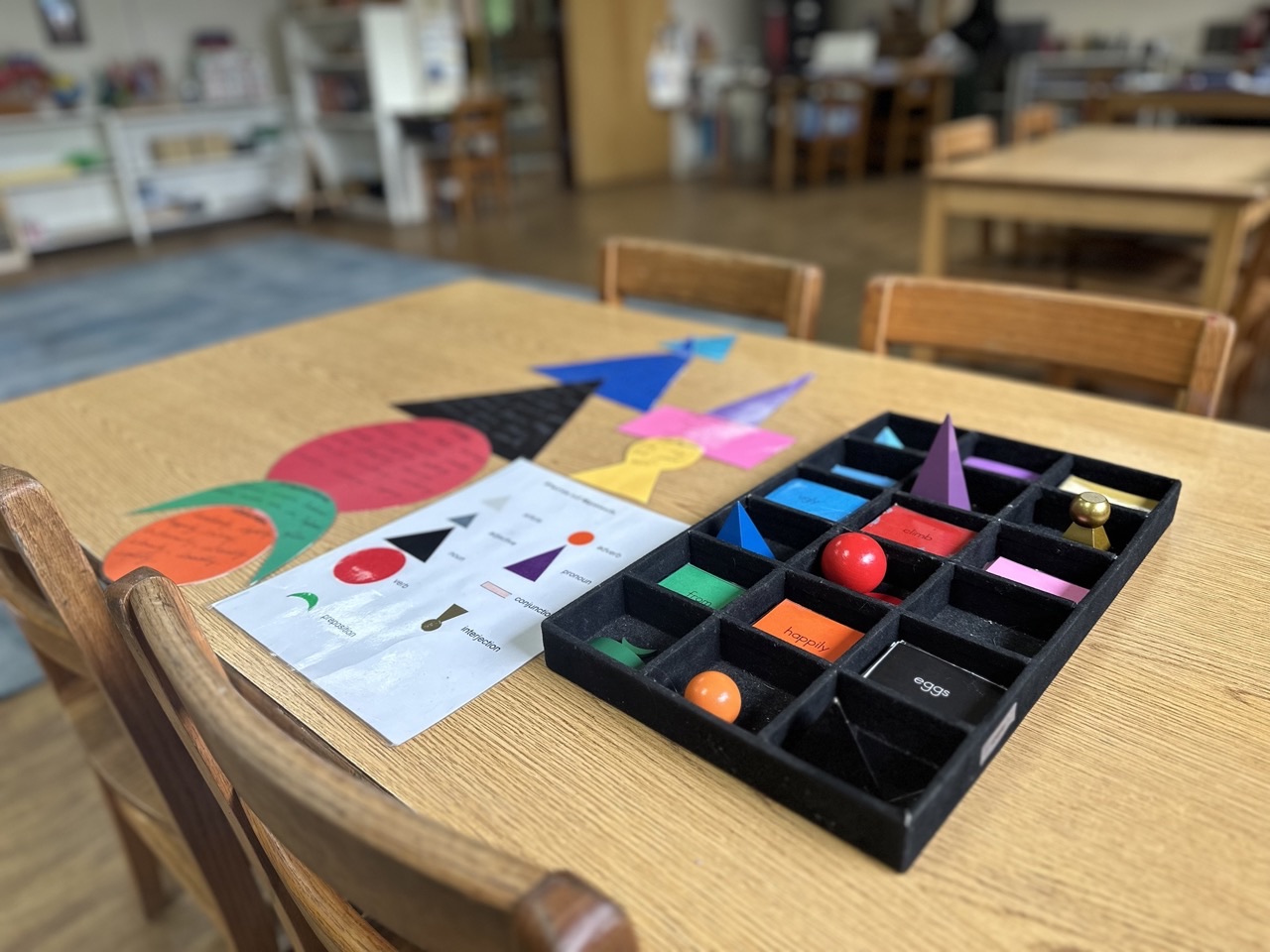
San Antonio offers many ways to enhance Montessori learning outside your home. The city’s parks, cultural spots, and community resources are ideal for hands-on exploration.
Nature-Based Learning Locations
Government Canyon State Natural Area features over 40 miles of trails. The 1.23-mile Discover Trail is family-friendly and perfect for nature observations. Kids can explore ecosystems and nurture their curiosity about the natural world.
San Antonio Botanical Garden spans 38 acres in the city’s heart. It offers classes and camps for kids, like the Children’s Vegetable Garden and Little Sprouts Hikes—activities that fit Montessori’s hands-on learning style.
Brackenridge Park is a family favorite. This historic park includes the Japanese Tea Garden and Witte Museum grounds, providing many chances for cultural and scientific discovery.
Educational Museums and Cultural Centers
The DoSeum embraces Montessori learning through play. This hands-on children’s museum features interactive exhibits connecting STEM, the arts, and literacy. Activities like Force Course and Spy Academy encourage independent exploration.
Witte Museum enhances natural history learning with the McLean Family Texas Wild Gallery, showcasing Texas’s regions, including a Texas thunderstorm. Its discovery-based approach aligns with Montessori philosophy.
San Antonio Public Library System offers great programming across many locations. It provides childhood literacy programs, educational activities, and cultural events that support home learning.
Seasonal South Texas Activities
Spring and Fall Exploration:
- Nature walks in city parks to collect seasonal treasures
- Wildflower identification along local trails
- Bird watching at parks and natural areas
- Outdoor gardening projects with native Texas plants
Summer Adventures:
- Early morning nature activities to beat the heat
- Water play at splash pads in city parks
- Indoor museum visits during peak heat hours
- Evening family walks along the River Walk
Winter Learning:
- Mild weather allows for year-round outdoor exploration
- Holiday cultural celebrations throughout the city
- Indoor activities at libraries and community centers
- Preparing for spring gardening projects
Community Resources
Free and Low-Cost Options:
- San Antonio Parks and Recreation manages over 250 city parks with diverse learning opportunities
- Many museums have free admission days, including The DoSeum’s monthly Family Night
- Public library storytimes and educational programs
- Community gardens for hands-on learning
Country Day Montessori Community Connections: Parents can enhance their child’s school experience by connecting with other families and joining local events that support Montessori principles in San Antonio.
San Antonio’s mild climate and rich culture make it ideal for applying Montessori principles outside the classroom. This environment offers endless chances for real-world learning and exploration.
Creating Lasting Change
Starting Montessori at home builds a foundation that lasts a lifetime. When you give kids accessible spaces and real jobs to do, their natural curiosity grows stronger. You’re not just teaching skills—you’re showing them their ideas and efforts truly matter.
Don’t worry about getting everything right immediately. Small changes make big differences. Maybe today you lower that coat hook. Tomorrow you let your child help make lunch. Each step builds their confidence and independence, one success at a time.
Here’s the truth: you already have everything needed. Your morning routine becomes math practice when kids help set the table. Folding laundry turns into a sorting game. Even arguments become chances to practice problem-solving together.
This isn’t about creating some perfect learning environment. It’s simply about respecting how kids naturally want to grow and learn. Watch what interests them. Celebrate when they figure things out on their own. Trust that they’re capable of more than you might expect.
The whole family benefits when you make these changes. Less arguing over little things. More cooperation during daily tasks. Kids who actually want to help instead of being asked repeatedly. These improvements stick around long after childhood ends.
Take the Next Step
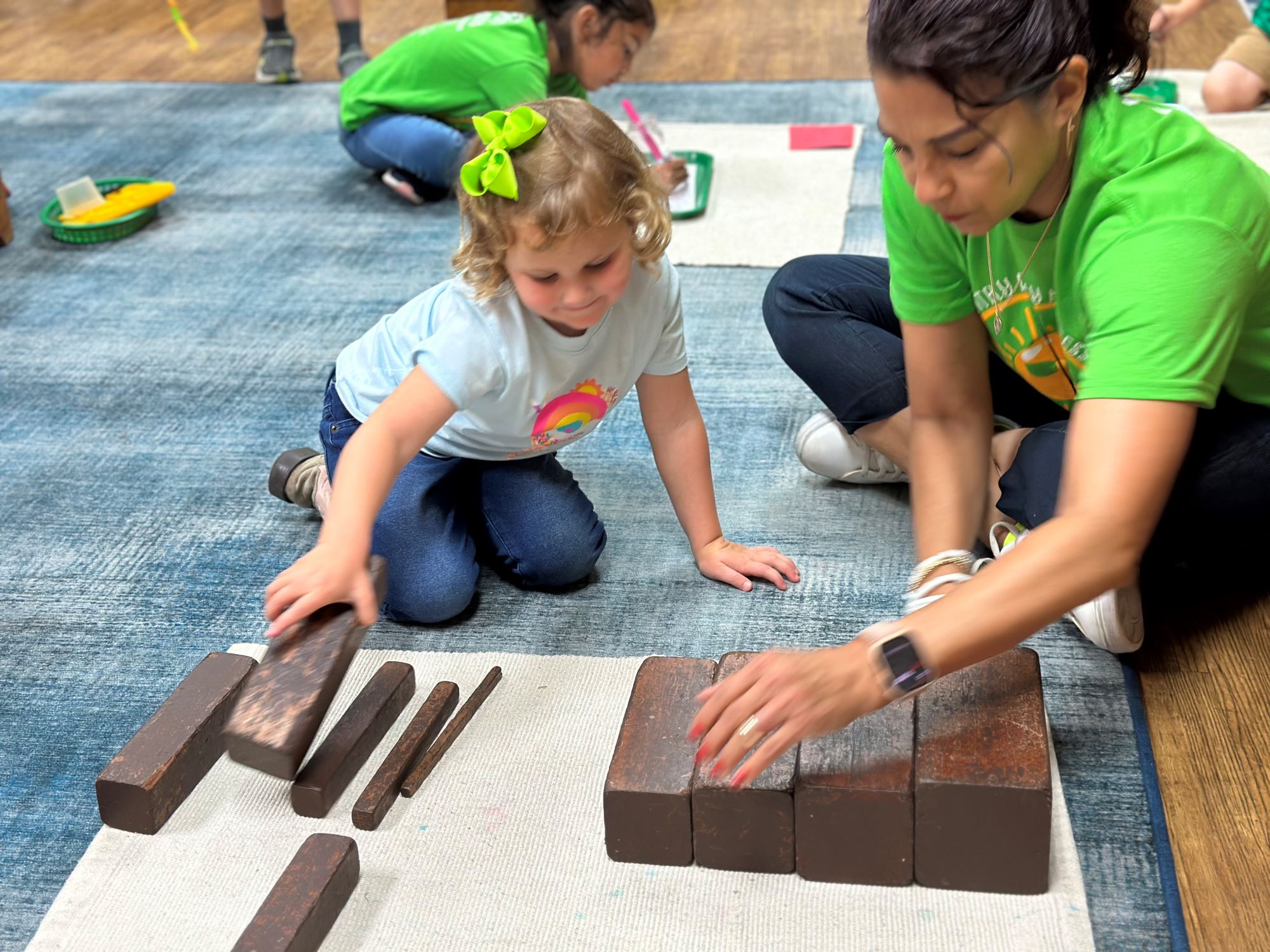
Want to see Montessori education in action? Country Day Montessori offers personalized help for using Montessori principles that fit your family’s needs. Our skilled educators know how to connect classroom learning with home life.
Schedule your tour today! Experience our prepared environments, meet our dedicated teachers, and see how Montessori education builds confident, capable learners. Call (210) 496-6033 or visit our Jung Road campus to learn how our authentic Montessori approach can benefit your child and family.
Frequently Asked Questions
How can families in Alamo Heights and Stone Oak create Montessori learning spaces in smaller homes?
Even compact homes in neighborhoods like Alamo Heights can become excellent Montessori environments. Utilize vertical space with low, accessible shelving units or create portable activity stations using baskets that can be easily moved from room to room. Designate specific areas for different activities—a reading corner in the living room or a small table near the kitchen for practical life work.
Are there Montessori-friendly resources near Southtown and King William District for hands-on learning?
Absolutely! The San Antonio Botanical Garden offers excellent opportunities for nature study, while the nearby San Antonio River provides a perfect setting for observing the water cycle and exploring ecosystems. The Pearl Farmers Market gives children real-world math and social experiences. Downtown's Majestic Square and Travis Park are great places to study nature. Also, the historic buildings in the King William District offer rich lessons in cultural geography, all in your neighborhood.
Can Montessori methods help with picky eating in San Antonio families?
Yes! Montessori approaches work wonderfully for expanding children's food preferences. Involve children in grocery shopping at local H-E-B stores or farmers' markets, where they can touch, smell, and choose fresh produce. Let them help wash vegetables, tear lettuce, or arrange fruit on plates. When children participate in food preparation, they're more willing to try new foods. Start a small herb garden with easy-to-grow Texas plants like cilantro or mint. Growing and harvesting food helps kids try things they once avoided.
What San Antonio seasonal activities support Montessori learning throughout the year?
San Antonio's climate offers year-round learning opportunities. Spring wildflower identification along local trails supports botany studies. Summer morning nature walks engage scientific observation. Fall pecan gathering from neighborhood trees provides counting and measuring practice. Mild winters are ideal for outdoor exploration and bird-watching at places like Mitchell Lake or Elmendorf Park. Each season presents unique opportunities to connect classroom learning with real-life Texas experiences.
Have questions about Montessori in San Antonio?
Schedule a tour or visit Admissions to see openings.
Serving families in Uptown Central & Universal City