But at the core, you’re not searching for dozens of possibilities. You’re searching for the one school where your child feels secure, encouraged, and genuinely understood. A place where drop-off doesn’t bring second thoughts and where the learning feels purposeful. Breaking down the main options makes the differences clearer, and picking the right fit much easier.
What Families Typically Look for in a Preschool
If you ask parents what matters most, you’ll hear versions of the same concerns. Safety—of course. A warm environment—yes. Teachers who remember your child’s quirks so they’re not swallowed up in the shuffle. And while every campus frames its strengths differently, most families circle back to a handful of core priorities:
- Balanced child-to-teacher ratios
- Real academic readiness (without burning kids out)
- Social and emotional support
- Daily structure that doesn’t feel suffocating
- Before- and after-care options compatible with full-time work
- Predictable costs and transparent communication
These aren’t abstract checkboxes. They’re the same priorities highlighted in national early learning data from NIEER, a long-standing research organization in child development. More importantly, they determine whether your child simply “gets through the day” or genuinely thrives. Keep these in mind—they’re the lens through which every preschool alternative below should be evaluated.
A Side-by-Side Look at San Antonio Preschool Alternatives
To give families a clearer starting point, here’s a simplified comparison of the most common early-learning models across the city.
| Preschool Type | Strengths | Limitations | Best Fit For |
|---|---|---|---|
| Traditional Preschool Programs |
|
|
Families wanting a classic, school-like model with clear structure and daily consistency |
| Childcare Centers With Preschool Curriculum |
|
|
Families needing extended care with some structured learning |
| Faith-Based Preschool Programs |
|
|
Families seeking gentle socialization and a community-oriented environment |
| Reggio Emilia–Inspired Schools |
|
|
Families valuing curiosity, creativity, and open-ended exploration |
| Co-ops, Nature Schools, and Alternative Microschools |
|
|
Families wanting community-driven, outdoorsy, or alternative pacing—not necessarily full-time academics |
Why Montessori Leads as a Preschool Alternative
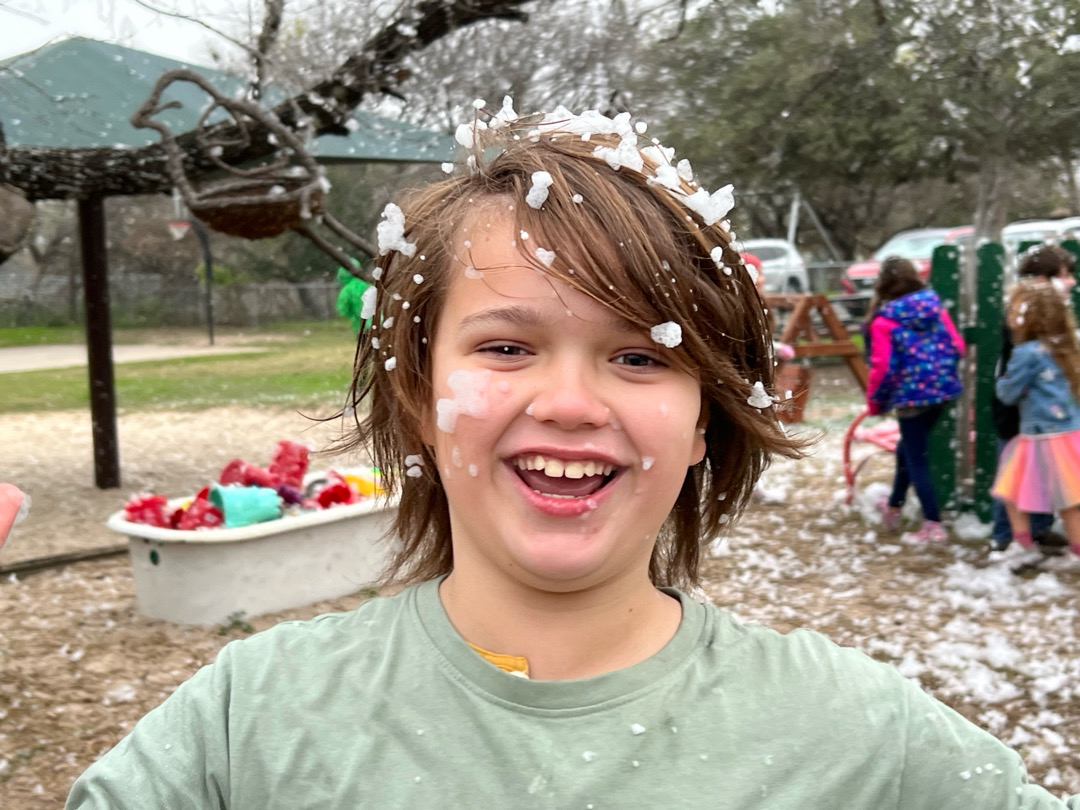
Montessori isn’t just “another option.” It’s often the option parents circle back to when they want independence, curiosity, and calm woven into their child’s everyday life.
Here’s why it consistently rises to the top:
- Child-led progression: Children move at their own pace.
- Mixed-age classrooms: Natural mentorship built into the structure.
- Hands-on materials: Designed to build logic, order, and concentration.
- Independence in every routine: Pouring, sorting, tying shoes, preparing snacks.
- Academic depth: Phonics-based reading, concrete math, geography, and more.
- Calm, purposeful rhythm: A peaceful hum of activity—never chaos.
If you’re curious how this plays out across San Antonio campuses, you might want to explore our Montessori Guide for Stone Oak parents, which offers a closer look at the method in real, local classrooms.
What Authentic Montessori Looks Like in Practice
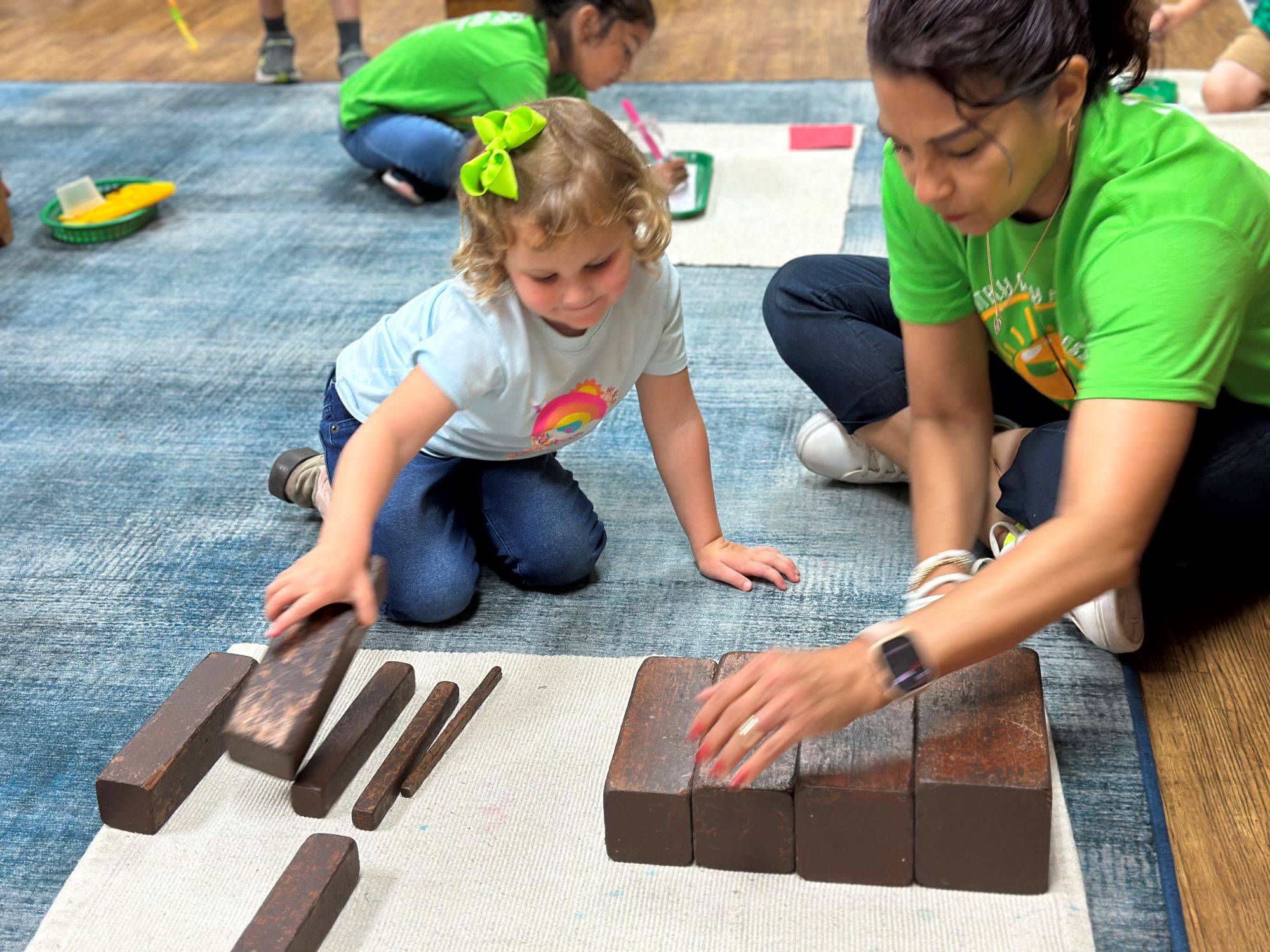
The learning spaces feel different. There’s movement, yes. Voices, yes. But the overall atmosphere is grounded. And that matters for children easily overwhelmed by noise. Classrooms often feature:
- Natural light and uncluttered shelves
- Materials that progress from simple to complex
- Real, functional tools in child-sized proportions
- Grace-and-courtesy lessons
- Predictable routines without rigidity
Some campuses incorporate gentle outdoor observation and local geography into daily life. For example, a simple walk near areas like Fenwick Dr and Midcrown Dr can turn into a sensory language exercise or an early science moment—small, meaningful parts of the “prepared environment” philosophy.
Which Families Montessori Serves Best

This learning style is well suited for:
- Curious explorers
- Independent thinkers
- Children who need calm, predictable rhythm
- Sensitive children who thrive in peaceful environments
- Families who want continuity from preschool through elementary
It’s also appealing to parents who want academic rigor without pressure, growth without burnout.
A Local Look at How Early Learning Shapes Later School Transitions
One thing San Antonio parents often think about—whether consciously or not—is how a child’s preschool experience shapes the transition into later schools. You see it during elementary tours, in parent forums, even in hallway conversations at places like Ed White Middle School where older siblings are already navigating bigger academic expectations. Families talk about children learning how to manage themselves—not just follow directions.
That’s where early-learning philosophy really matters. Programs that help children develop organization, problem-solving skills, and emotional steadiness tend to make the jump into elementary (and eventually middle school) smoother. Parents often say they’re less concerned about a preschool boasting a long list of “academic extras” and more focused on whether their child will walk into their next school ready to engage, ask questions, and adapt to new environments.
Quick Checklist to Compare Your Preschool Choices
While touring or researching any preschool, take note of:
- Whether children wait for instructions or choose meaningful work
- How calmly teachers redirect behavior
- The noise level—peaceful or overstimulating?
- Evidence of independence
- Staff tenure and training
- Order, cleanliness, and flow
- Whether the environment feels like a place your child could grow long-term
Trust your instincts. They sharpen quickly when you visit multiple campuses.
A Better Start Begins Here
When you understand how each preschool model supports your child’s growth, the decision becomes clearer. Montessori offers a calm, purposeful environment where children build a genuine love of learning.
Families may call us at 210-496-6033 to speak directly with the admissions team and plan a visit.
Frequently Asked Questions
Is the method beneficial for active children who struggle to sit still?
Yes. Montessori classrooms expect movement. Materials encourage hands-on exploration and purposeful walking. On your campus visit, you’ll notice kids actively directing their energy into tasks. They won’t be sitting still for long periods.
How does the approach teach reading compared to traditional preschools?
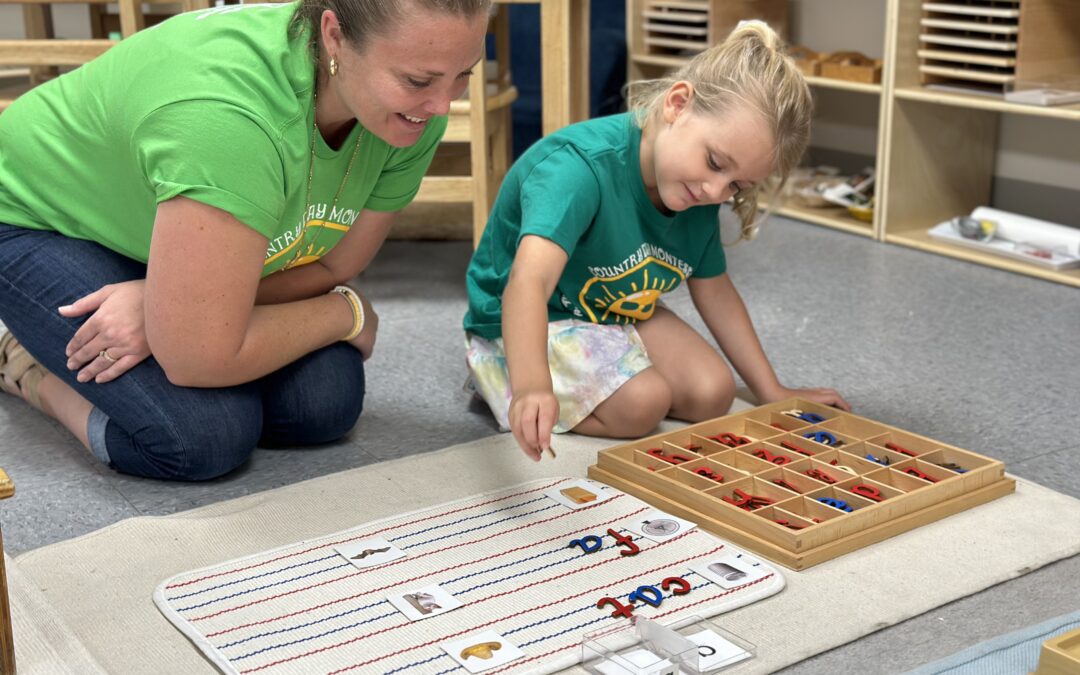
Instead of memorizing letters on worksheets, Montessori children use tactile materials to learn phonetic sounds. This leads to confident early reading. You’d see this firsthand in classrooms where children sound out words with movable alphabets.
Does Montessori offer enough socialization?
Absolutely. Mixed-age settings encourage mentorship and natural collaboration. Children help one another as part of the daily flow. You’ll notice small groups naturally forming around shared work—not forced activities.
What should I look for during a campus tour?
Look for order, calm movement, patient teacher guidance, and materials arranged from simple to advanced. They will show if the environment feels peaceful, purposeful, and true to Montessori practice.